CP-Type Pallets
All nine chemical-industry formats, CP1 to CP9, built to the standard CP dimensions and board layouts for drums, sacks, octabins and bulk containers.
The nine CP (chemical pallet) formats were created by the European chemical and plastics industry so that drums, sacks, octabins and bulk bags could move through automated filling lines and high-bay stores. Each format has a fixed size, height, board layout and block position, and plants size their conveyors around them.
We build every CP format to those standard dimensions: CP1 to CP5 at 138 mm high with three bottom boards, CP6 to CP9 at 156 mm with a two-layer base.
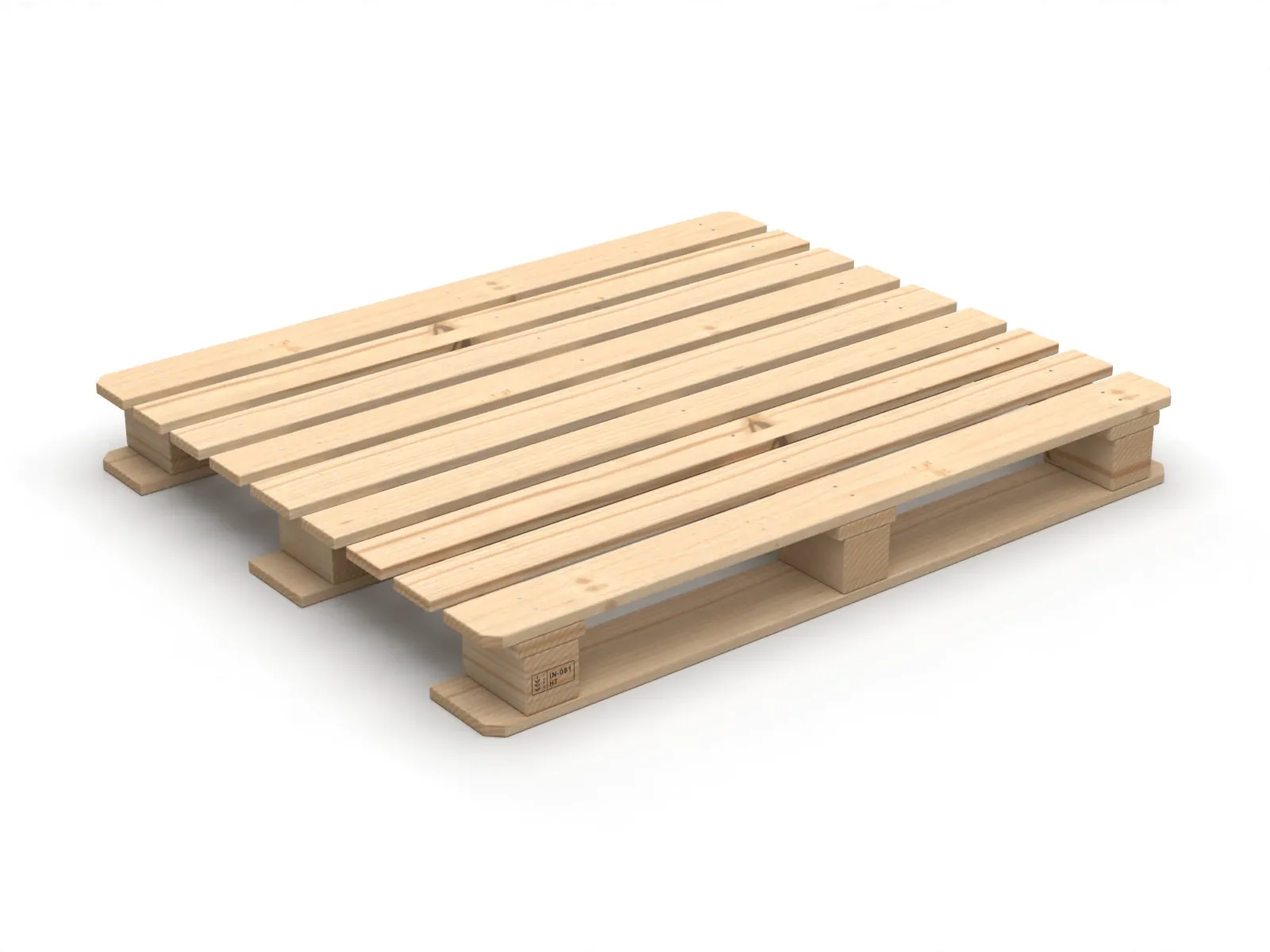
CP1-Type Chemical Pallet 1000 × 1200
The most widely used chemical pallet format, 1000 × 1200 mm, for sacks, cartons and boxes on automated filling lines.
- Dimensions: 1000 × 1200 × 138 mm
- Construction: Block pallet, 3 bottom boards
- Entry: 4-way
- Components: 15 boards, 9 blocks
- Material: Softwood (pine / spruce)
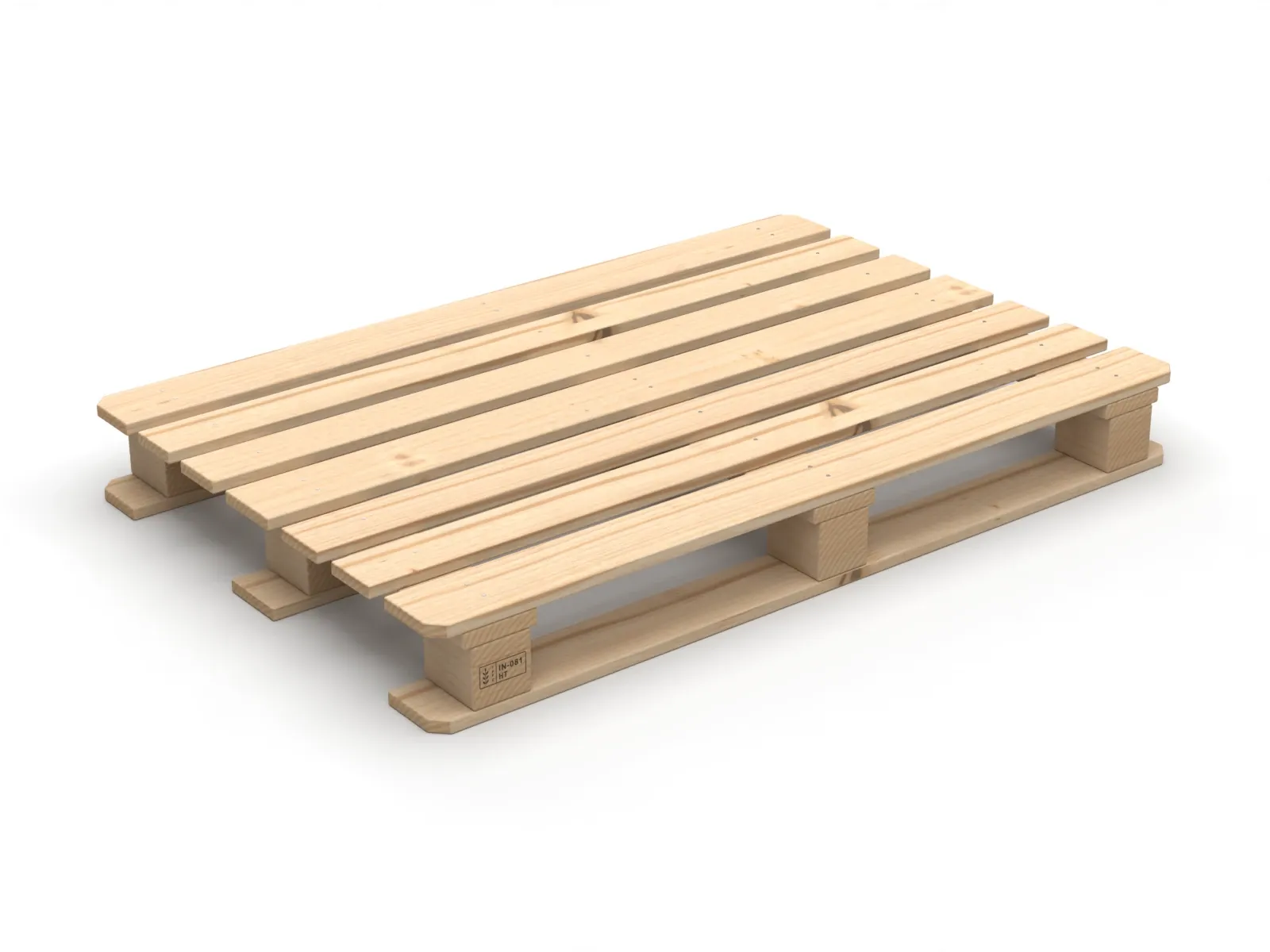
CP2-Type Chemical Pallet 800 × 1200
The Euro-footprint chemical pallet, 800 × 1200 mm, with seven top boards for retail-type supply chains.
- Dimensions: 800 × 1200 × 138 mm
- Construction: Block pallet, 3 bottom boards
- Entry: 4-way
- Components: 13 boards, 9 blocks
- Material: Softwood (pine / spruce)
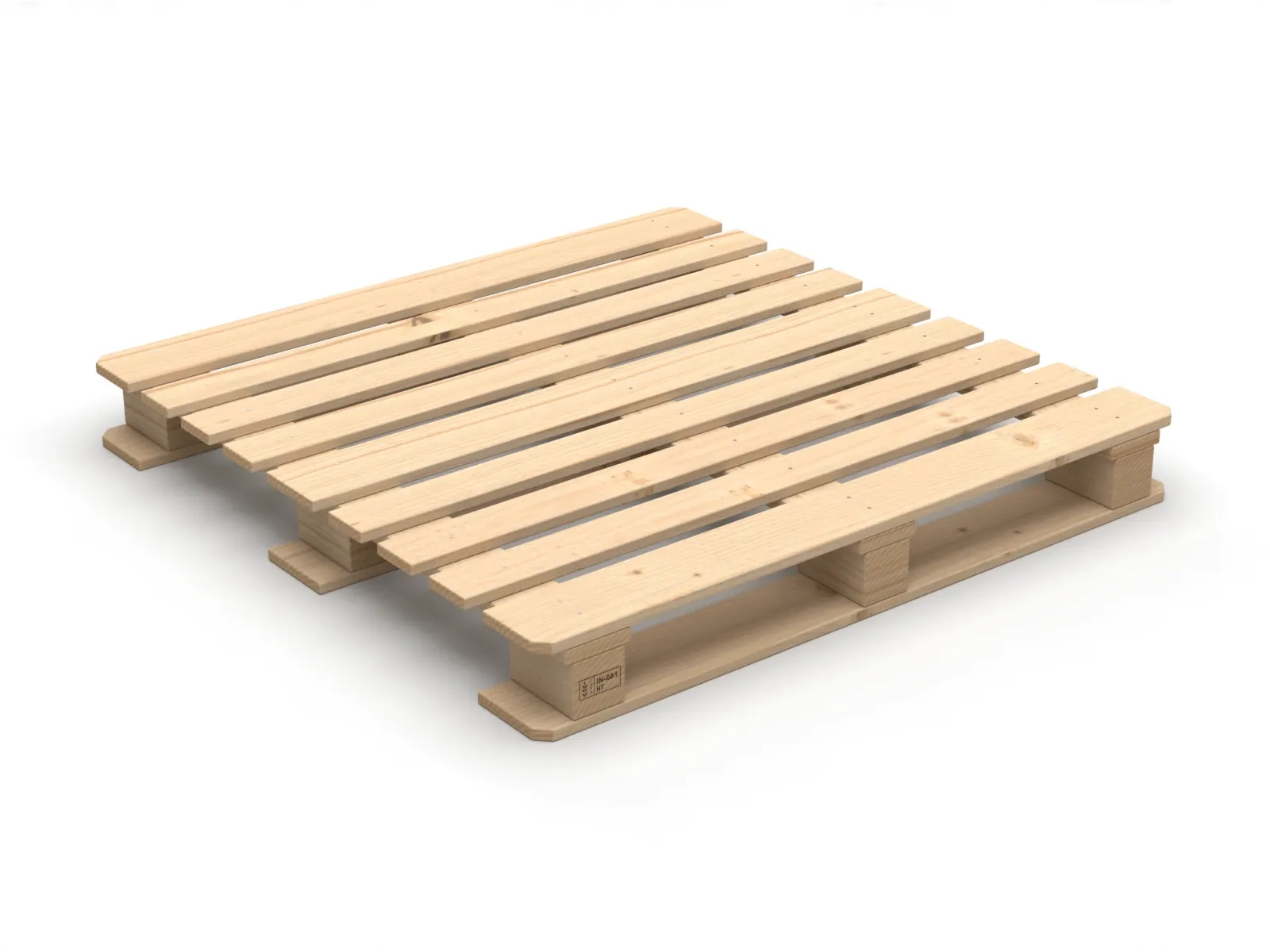
CP3-Type Chemical Pallet 1140 × 1140
The square 1140 × 1140 mm container pallet, sized for four 200-litre drums or one octabin.
- Dimensions: 1140 × 1140 × 138 mm
- Construction: Block pallet, 3 bottom boards
- Entry: 4-way
- Components: 15 boards, 9 blocks
- Material: Softwood (pine / spruce)
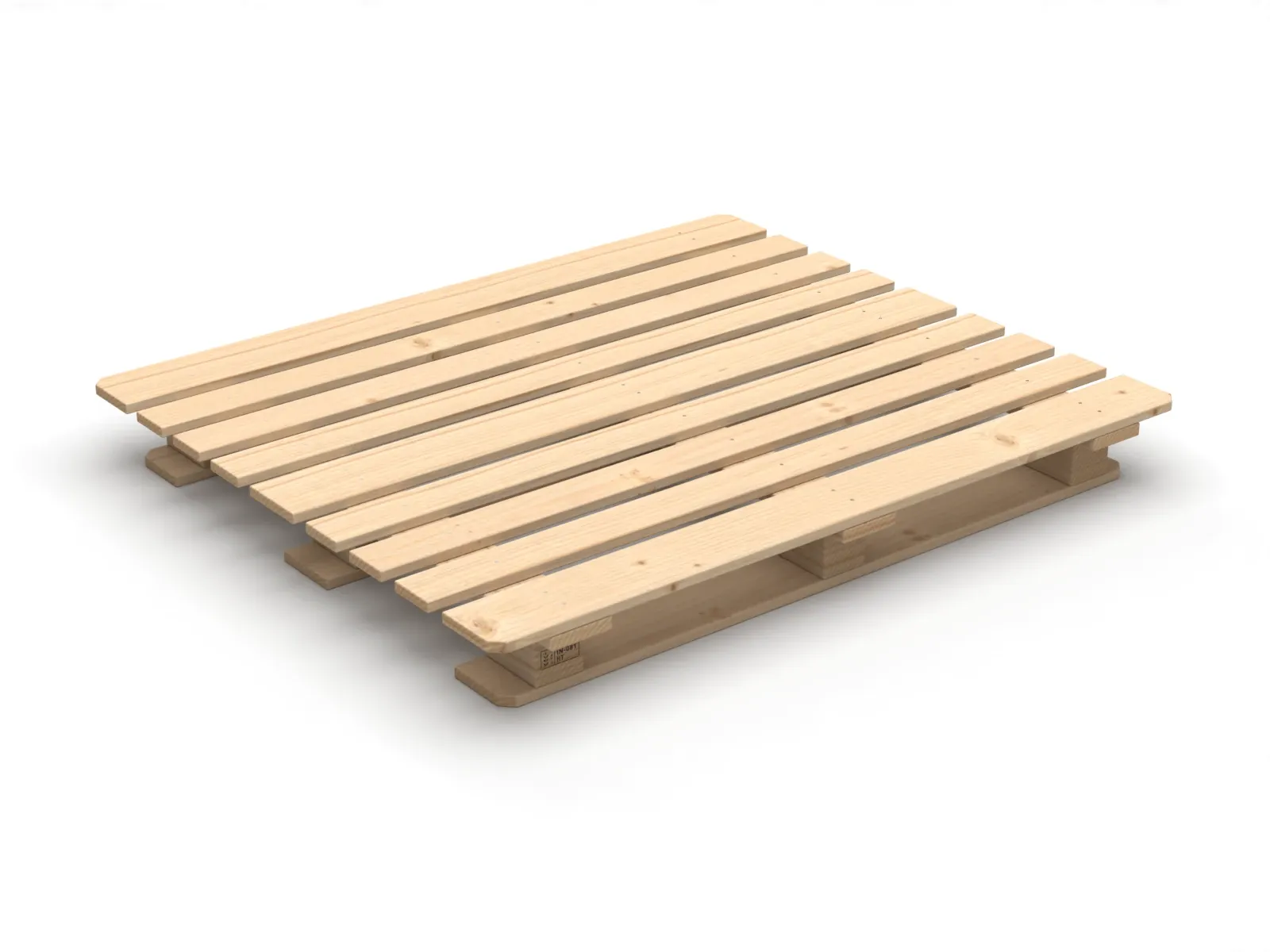
CP4-Type Chemical Pallet 1100 × 1300
A long 1100 × 1300 mm chemical pallet whose deck overhangs a 1200 × 1000 base, mainly for stacks of bagged goods such as polymer granules.
- Dimensions: 1100 × 1300 × 138 mm
- Construction: Block pallet, deck overhangs a 1200 × 1000 base
- Entry: 4-way
- Components: 15 boards, 9 blocks
- Material: Softwood (pine / spruce)
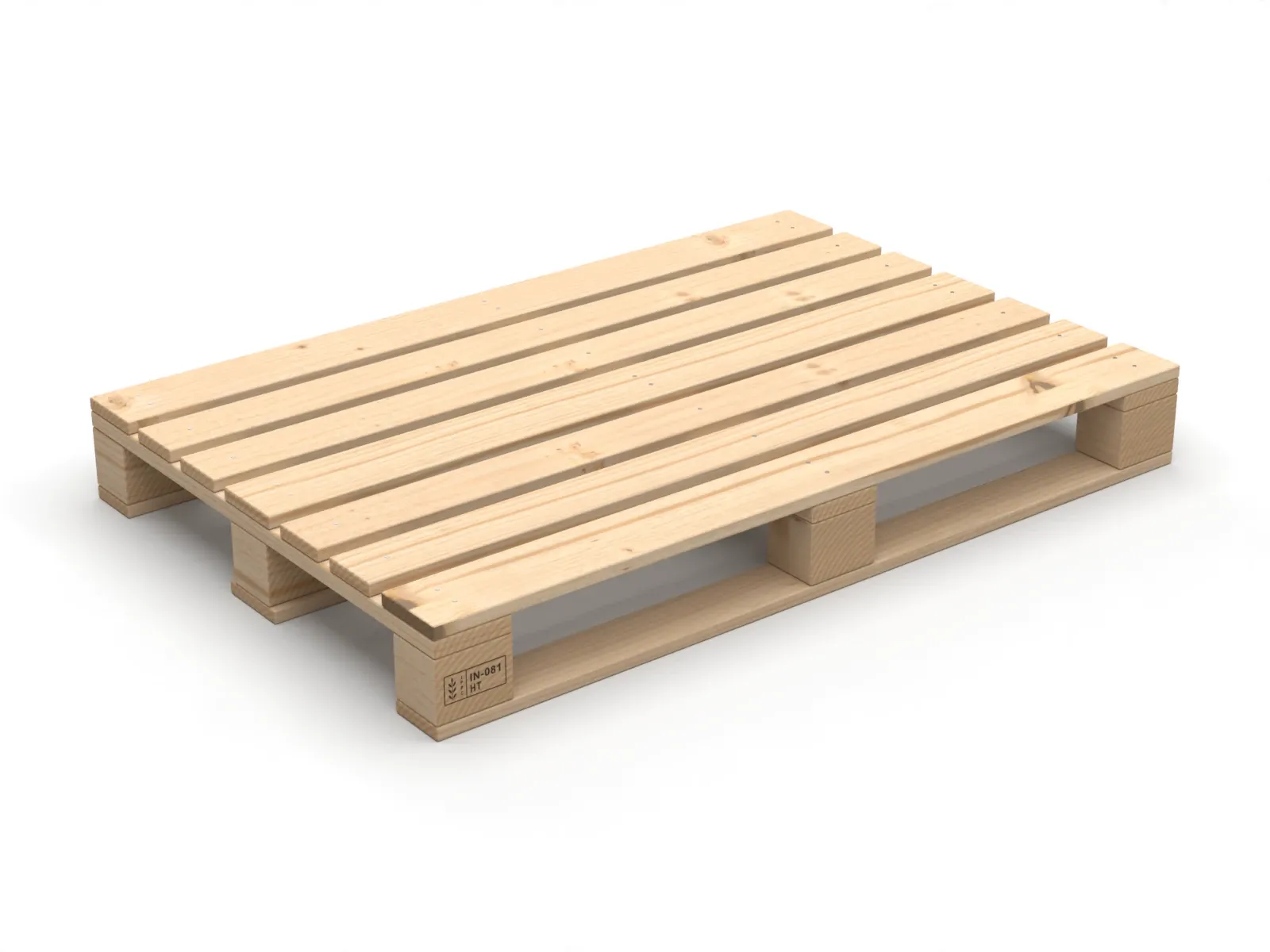
CP5-Type Chemical Pallet 760 × 1140
The narrow 760 × 1140 mm container pallet for cartons, crates and smaller packs.
- Dimensions: 760 × 1140 × 138 mm
- Construction: Block pallet, 3 bottom boards, square corners
- Entry: 4-way
- Components: 13 boards, 9 blocks
- Material: Softwood (pine / spruce)
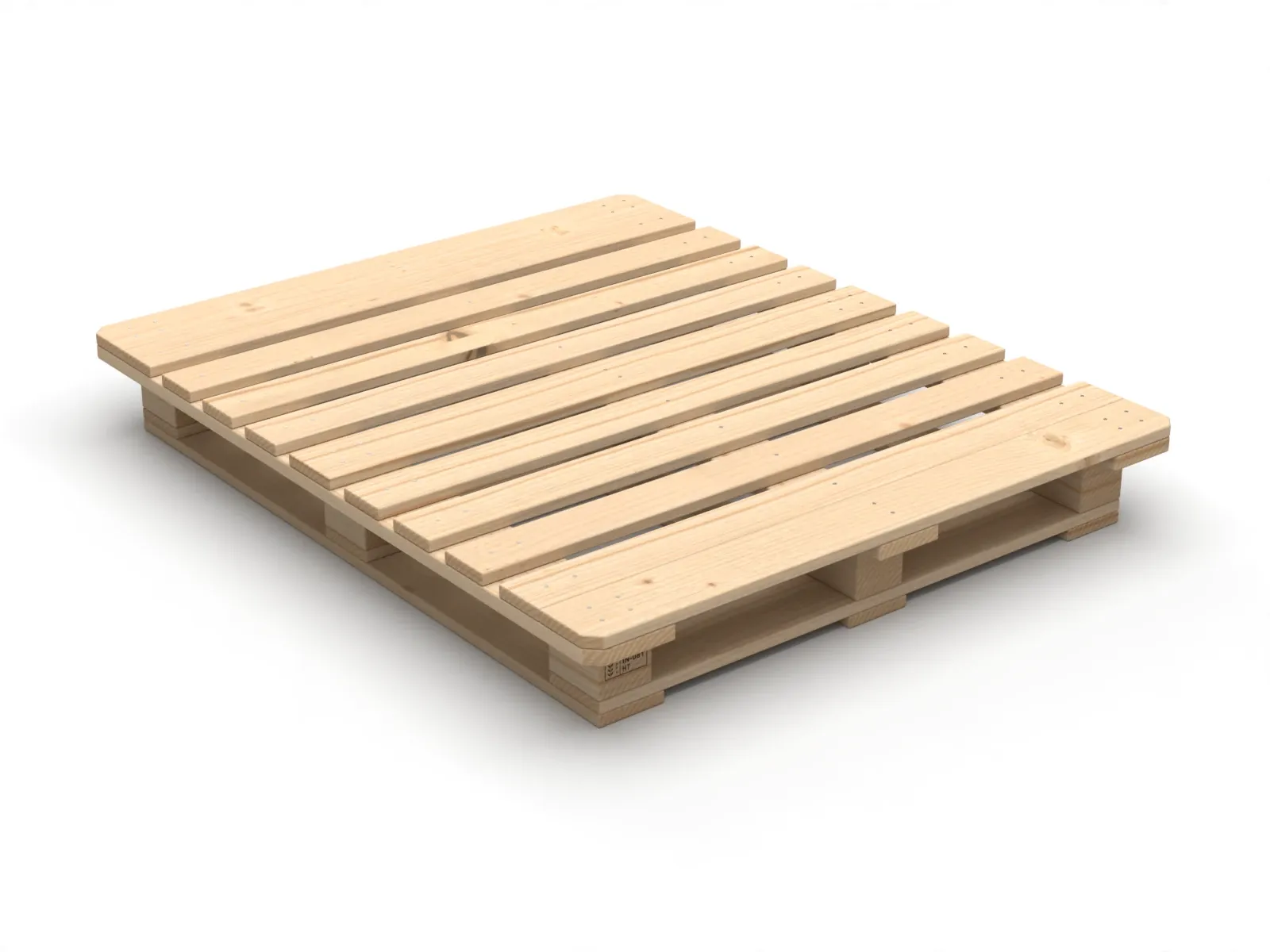
CP6-Type Chemical Pallet 1200 × 1000
A 1200 × 1000 mm chemical pallet with a two-layer base, for heavy stacks of bagged bulk materials.
- Dimensions: 1200 × 1000 × 156 mm
- Construction: Block pallet, two-layer base
- Entry: 4-way
- Components: 20 boards, 9 blocks
- Material: Softwood (pine / spruce)
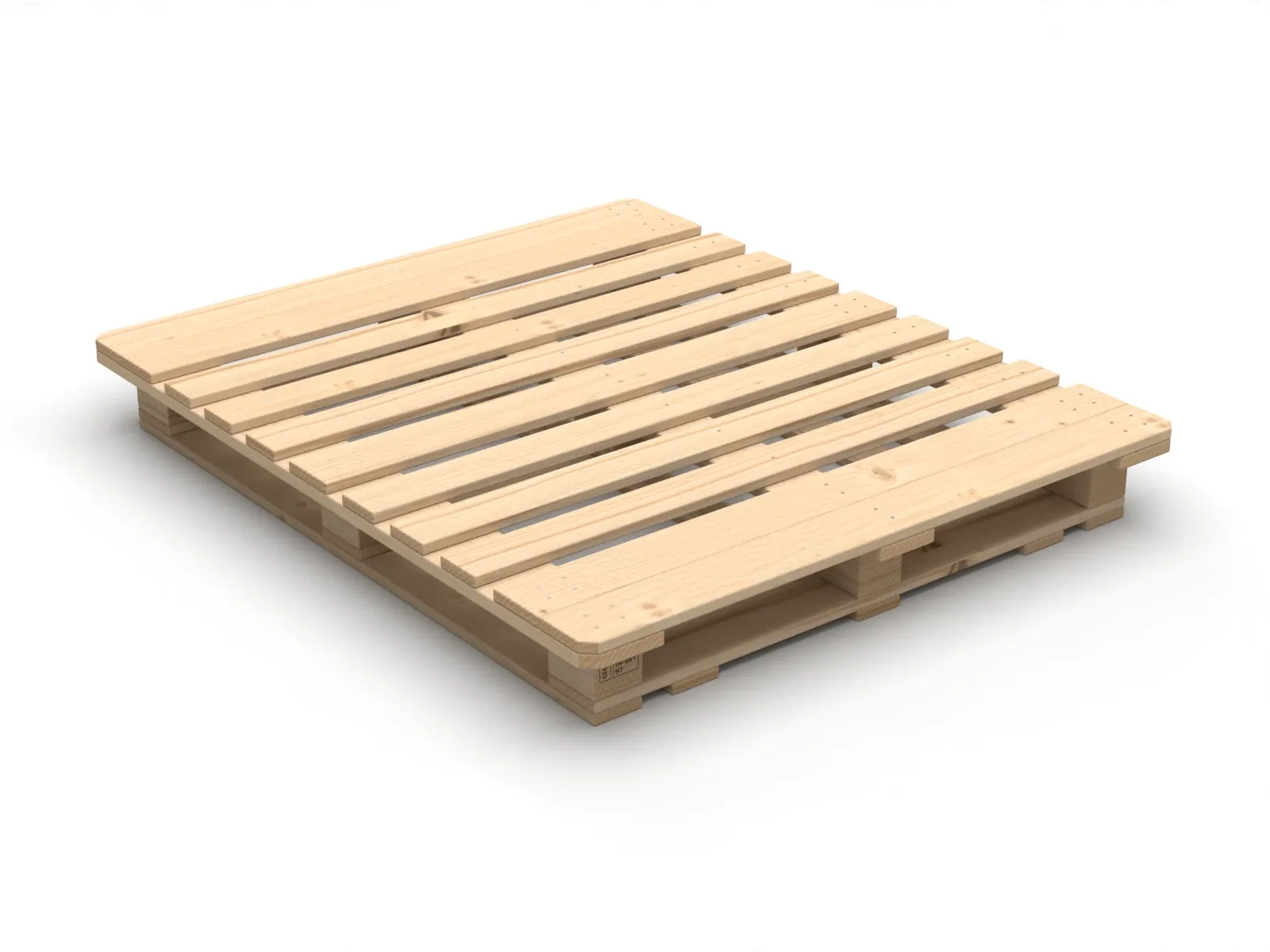
CP7-Type Chemical Pallet 1300 × 1100
The largest CP format, 1300 × 1100 mm, with a two-layer base for big layers of bagged bulk goods.
- Dimensions: 1300 × 1100 × 156 mm
- Construction: Block pallet, two-layer base
- Entry: 4-way
- Components: 22 boards, 9 blocks
- Material: Softwood (pine / spruce)
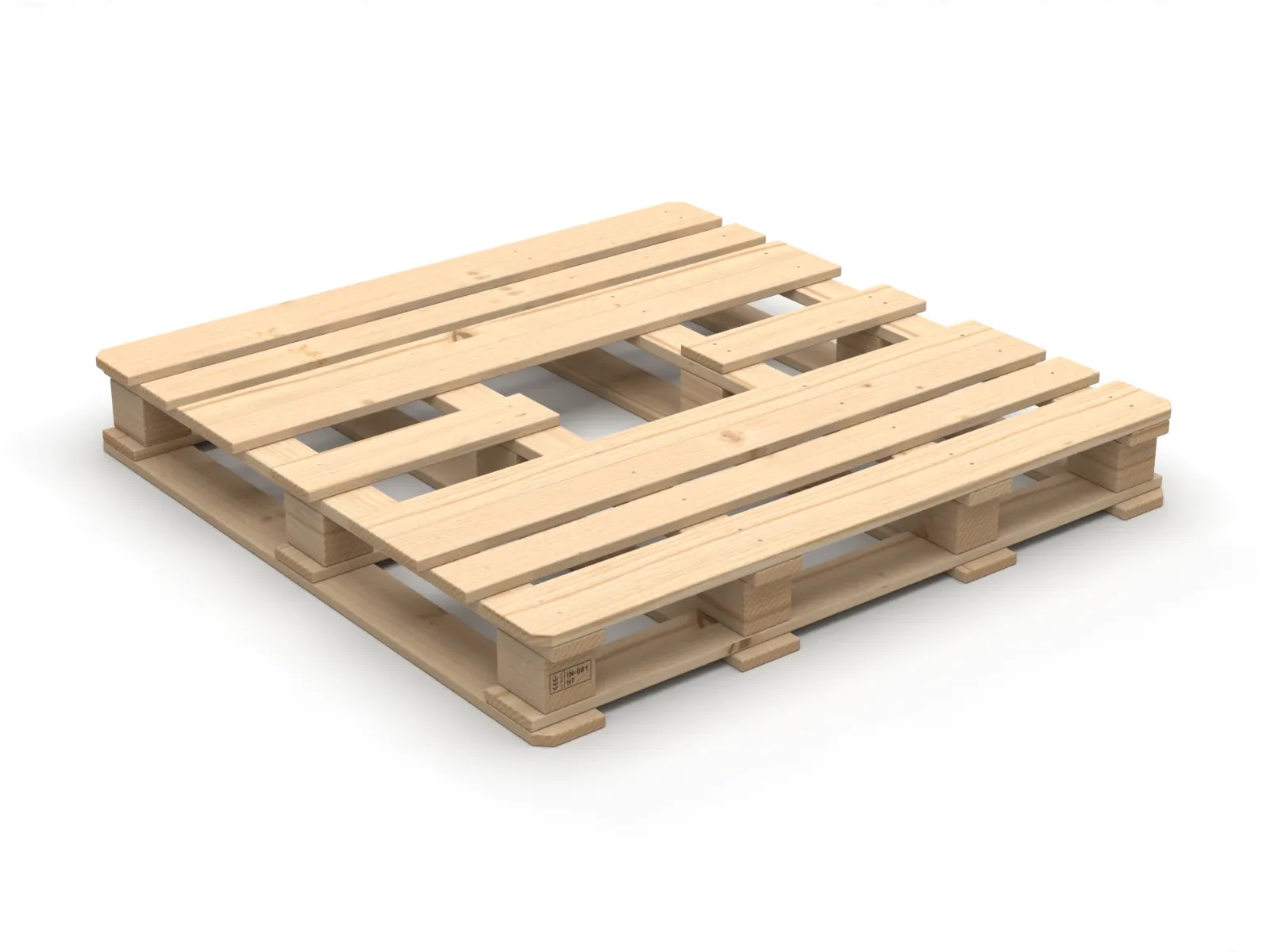
CP8-Type Chemical Pallet 1140 × 1140
A 12-block square container pallet with an open deck centre, for large containers that discharge through a bottom outlet.
- Dimensions: 1140 × 1140 × 156 mm
- Construction: Block pallet, two-layer base, open deck centre
- Entry: 4-way
- Components: 12 blocks, 4 stringer boards
- Material: Softwood (pine / spruce)
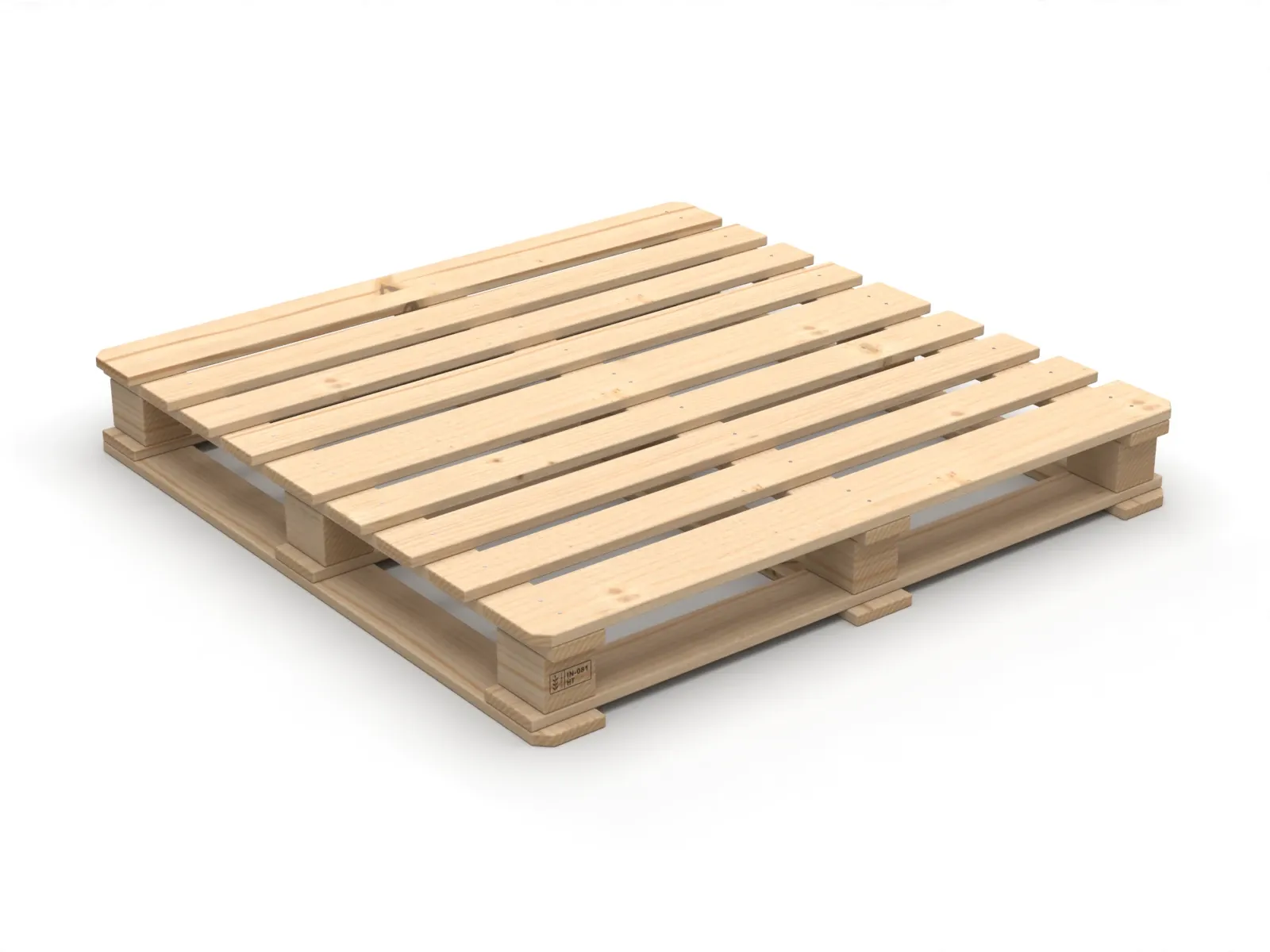
CP9-Type Chemical Pallet 1140 × 1140
A square 1140 × 1140 mm container pallet with a two-layer base, for casks and flexible bulk containers (FIBCs).
- Dimensions: 1140 × 1140 × 156 mm
- Construction: Block pallet, two-layer base
- Entry: 4-way
- Components: 9 blocks, two-layer base
- Material: Softwood (pine / spruce)
Choosing the right CP format
- CP1 (1000 × 1200): bagged goods, cartons and boxes.
- CP2 (800 × 1200): retail-type flows on the Euro footprint.
- CP3 (1140 × 1140): square pallet for drums, casks and octabins.
- CP4 (1100 × 1300): bagged goods such as polymer granules; the deck overhangs the base.
- CP5 (760 × 1140): narrow pallet for cartons and crates.
- CP6 (1200 × 1000) and CP7 (1300 × 1100): two-layer base for bagged bulk materials.
- CP8 (1140 × 1140): 12 blocks and an open deck centre for containers with a bottom outlet.
- CP9 (1140 × 1140): two-layer base for casks and flexible bulk containers (FIBCs).
Made for automated plants
A pallet a few millimetres out, or one with a loose board, can stop a filling line. We cut boards and blocks to the CP layout, place blocks and stringer boards at the standard positions and check every batch before it leaves the plant.
Frequently Asked Questions
What does CP mean on a pallet?
CP means chemical pallet: a family of nine standard sizes, CP1 to CP9, used by the chemical, polymer and plastics industries for drums, sacks and bulk containers.
Are your CP pallets EPAL CP pallets?
No. We build CP-type pallets to the standard CP dimensions and layouts, but we do not hold an EPAL licence, so they carry our ISPM-15 mark and not the EPAL or CP type markings.
Which CP pallet is used for drums?
CP3 (1140 × 1140 × 138 mm) is the usual drum and octabin pallet. CP9 has a two-layer base for heavier casks and FIBCs.
Other Pallet Families
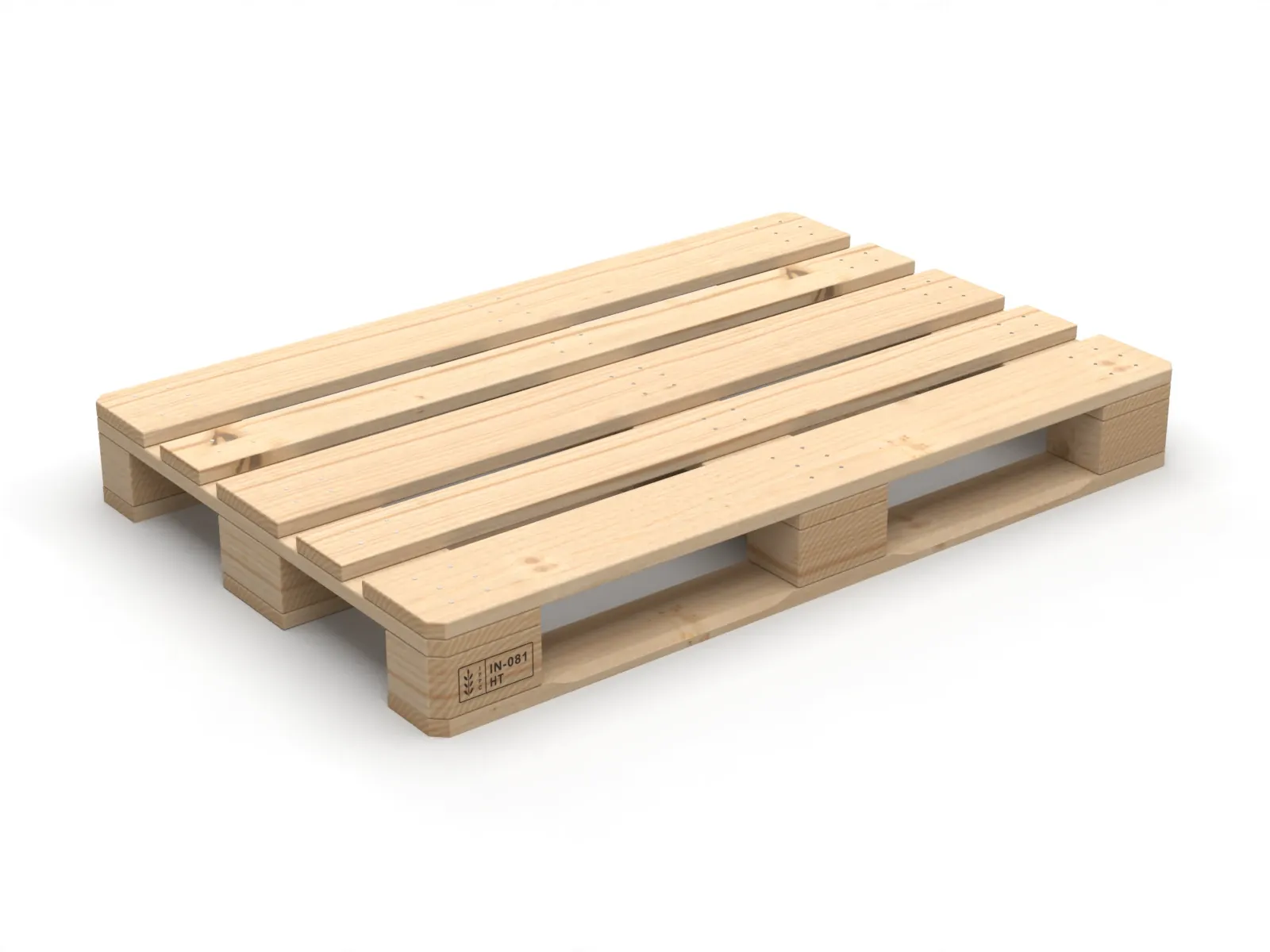
Euro-Size Pallets
Pallets built to the Euro pallet family dimensions and construction: 1200 × 800 and two 1200 × 1000 industrial formats, 4-way entry, chamfered corners, heat treated for export.
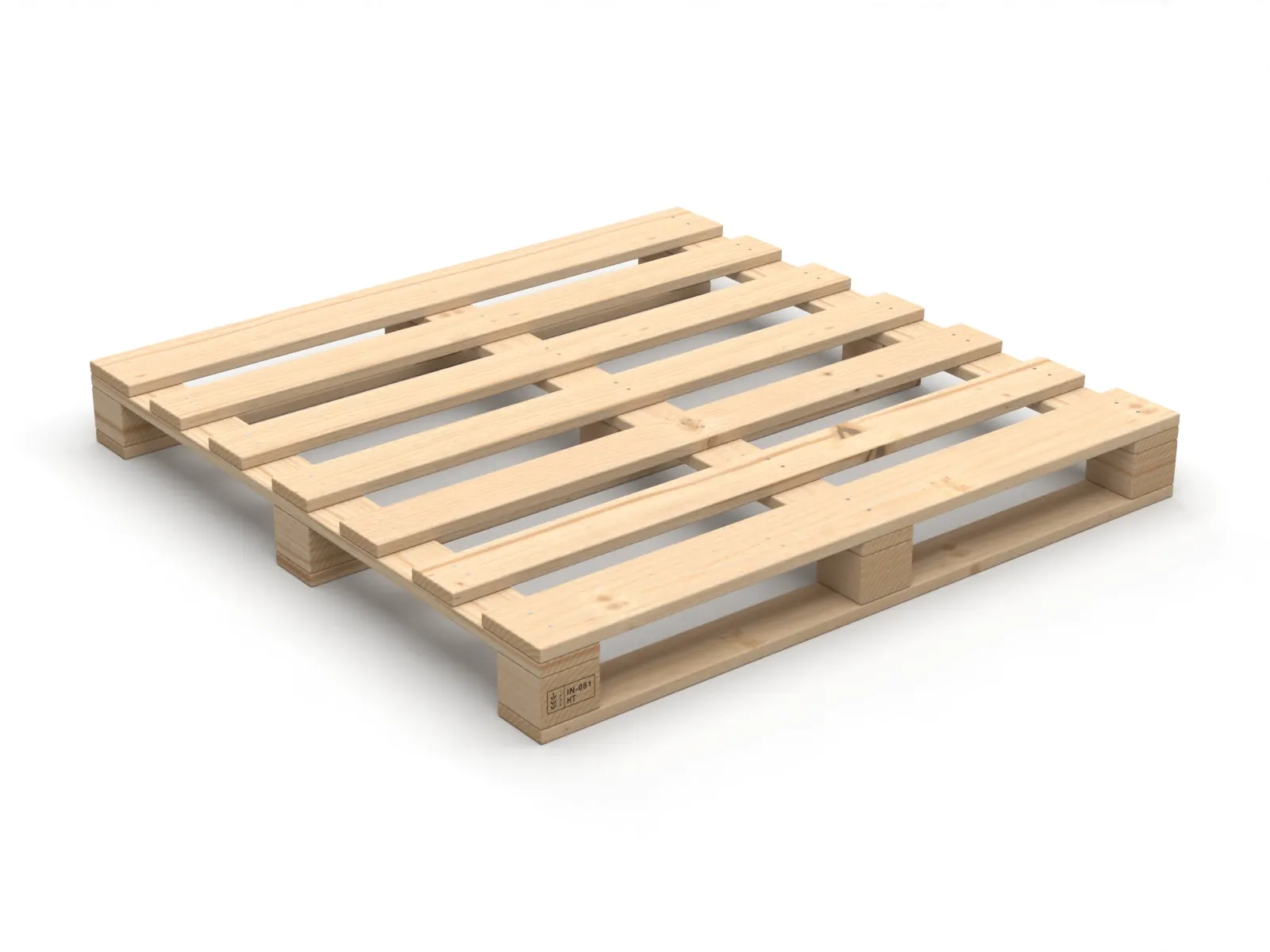
Pinewood Pallets
Light, strong for their weight and economical: pinewood block, stringer and skid pallets in popular sizes or built to yours.
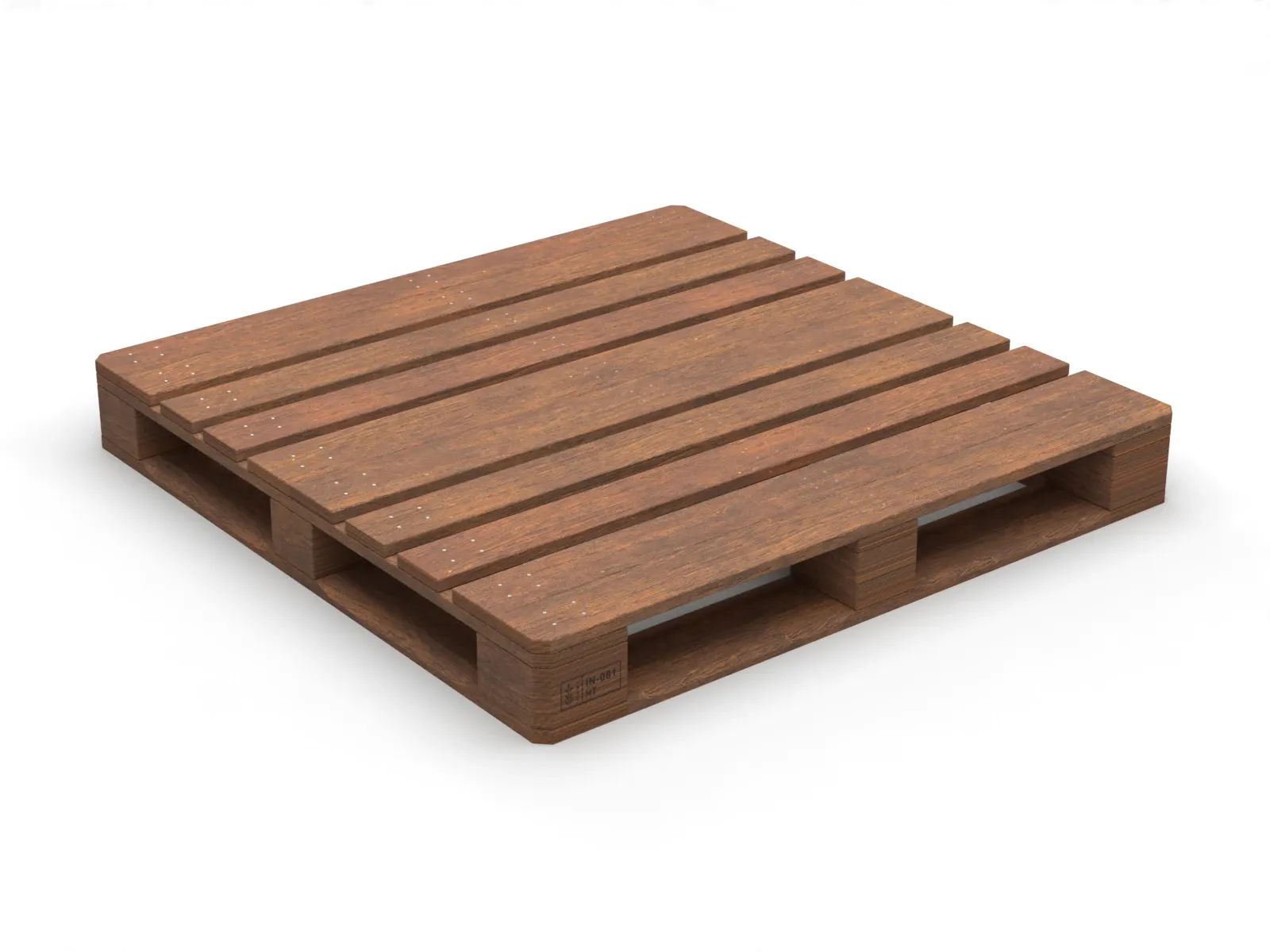
Hardwood Pallets
Dense, heavy-duty hardwood block, stringer and skid pallets for machinery, metal and other heavy or concentrated loads.