By Ambica Patterns India Pvt Ltd ·
If your goods leave India on a wooden pallet, that pallet has to meet ISPM-15. Get it wrong and a shipment can be held at the destination port, fumigated at your cost or sent back. This guide explains what the standard requires in plain terms.
What is ISPM-15?
ISPM-15 is the International Standard for Phytosanitary Measures No. 15, published by the International Plant Protection Convention (IPPC), part of the UN Food and Agriculture Organization. Its purpose is to stop wood-boring insects and plant diseases from travelling around the world inside packaging timber.
It applies to wood packaging material made of solid wood thicker than 6 mm: pallets, crates, boxes, cable drums and the dunnage used to brace cargo. Most countries that trade internationally, including the EU, the USA, Canada, Australia, China and the Gulf states, enforce it at their borders.
Packaging made entirely from processed wood, such as plywood, particle board, OSB or veneer, is exempt, because the manufacturing process already kills pests.
How heat treatment works
There are approved treatments, but heat treatment (marked HT) is the one most exporters use:
- The pallets, or the timber they are made from, are loaded into a heat-treatment chamber.
- Temperature probes are placed in the core of the thickest pieces, not just in the air.
- The chamber is heated until the wood core reaches at least 56 °C and stays there for at least 30 continuous minutes.
- The cycle is recorded so it can be audited.
Wood must also be debarked before treatment, with only small, specified traces of bark allowed.
Methyl bromide fumigation (MB) is also recognised by ISPM-15, but it is being phased out internationally because it damages the ozone layer; it is banned for use inside the EU, and many importers now ask for HT only. Heat treatment leaves no chemical residue, which is why food, pharma and chemical customers prefer it.
Reading the IPPC stamp
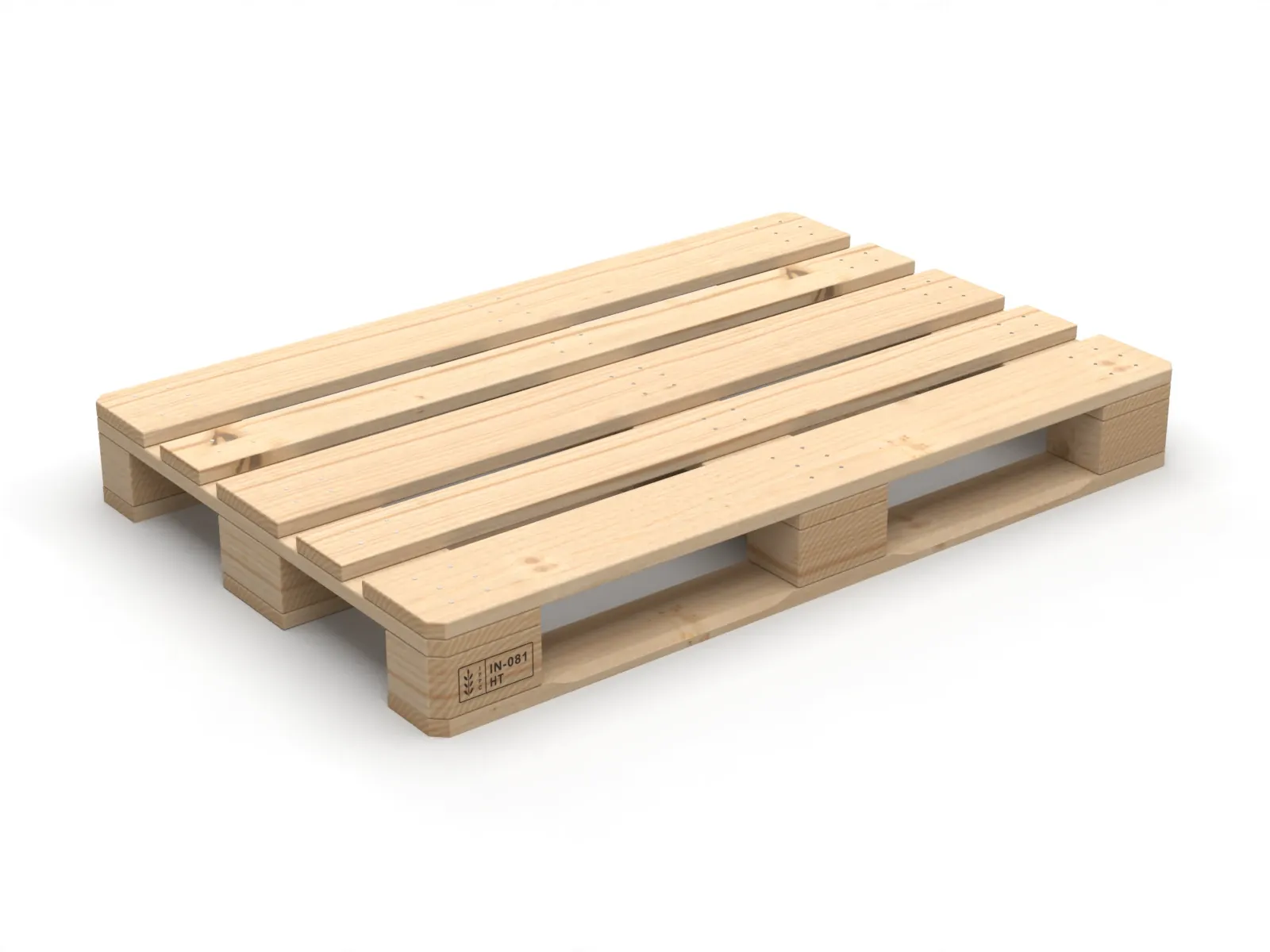
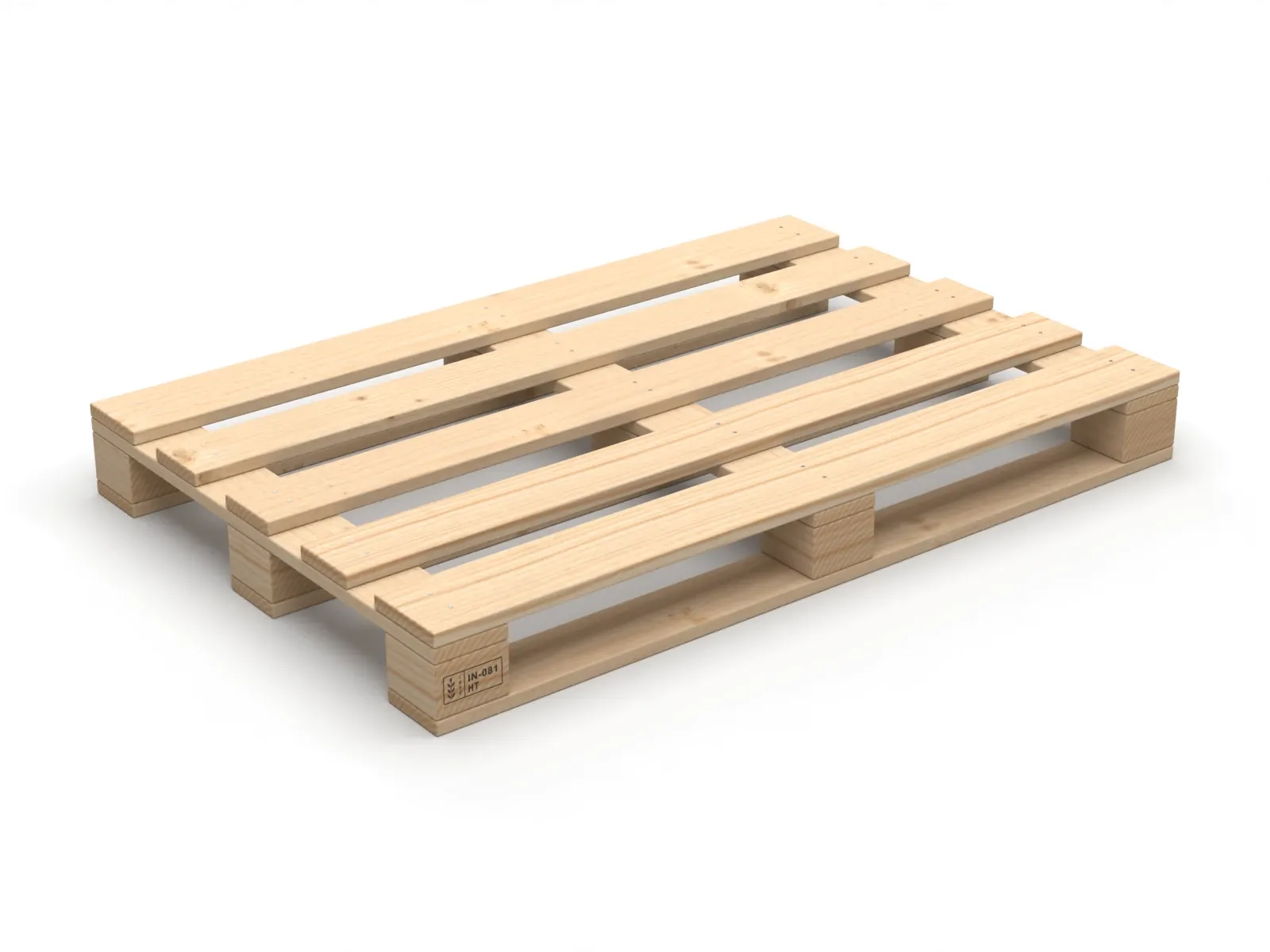
A compliant pallet carries a mark on at least two opposite sides, usually on the blocks or stringers. It contains:
- The IPPC symbol, a stylised wheat ear.
- The country code: IN for India.
- The registration number of the treatment provider, issued by the national plant protection organisation. In India that is the Directorate of Plant Protection, Quarantine & Storage.
- The treatment code: HT for heat treatment, MB for methyl bromide, DH for dielectric heating, SF for sulphuryl fluoride.
So a mark that reads IN-081 HT means: treated in India, by registered provider 081, using heat treatment.
If the stamp is missing, faded or incomplete, customs at the destination can treat the pallet as non-compliant.
Repairs and re-use
If a treated pallet is repaired, the new components must also be treated. When a large share of the pallet is replaced, it must be treated again as a whole and re-marked. Buying from a manufacturer that treats in-house avoids gaps in this chain.
How Ambica Patterns handles it
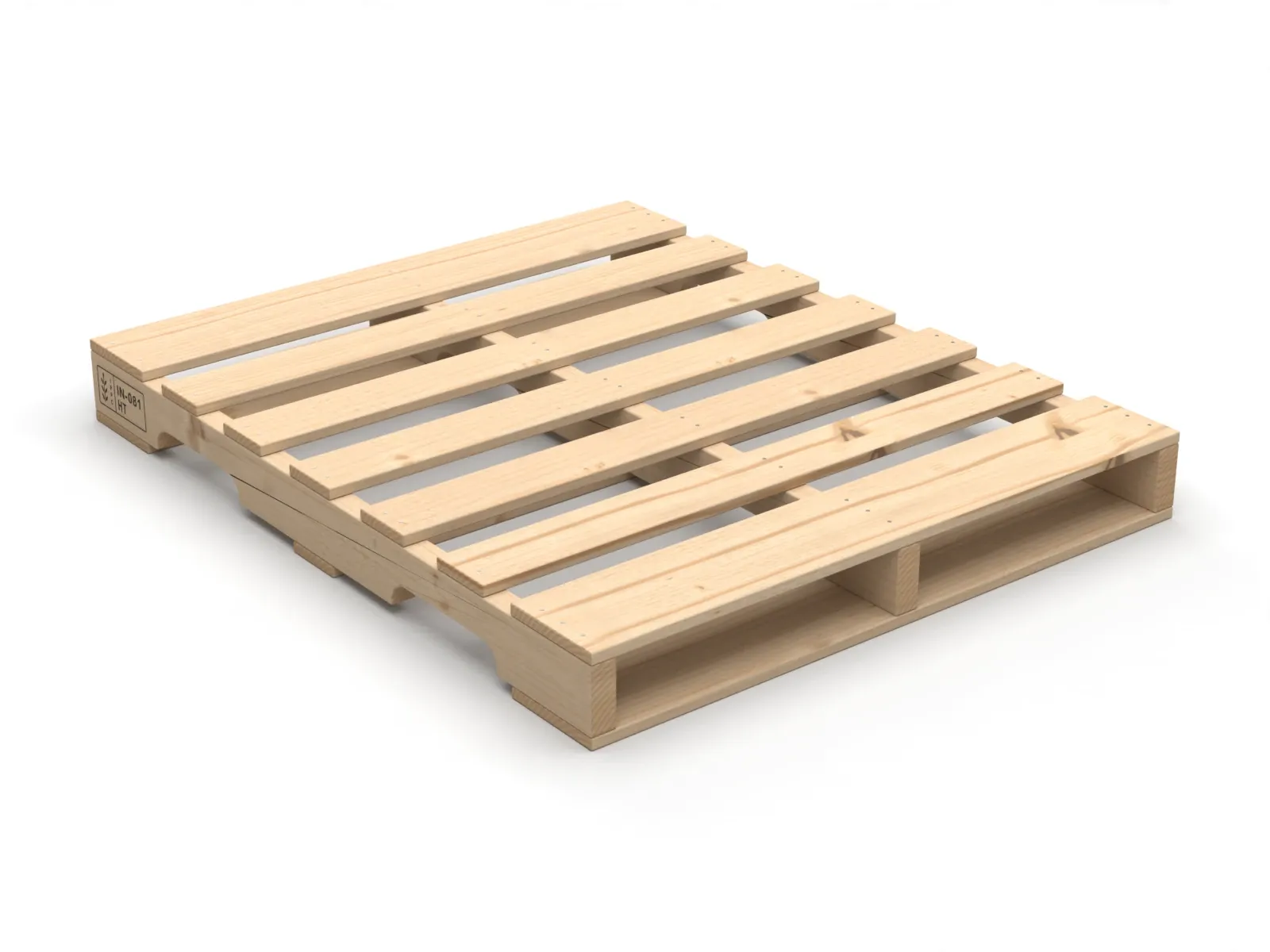
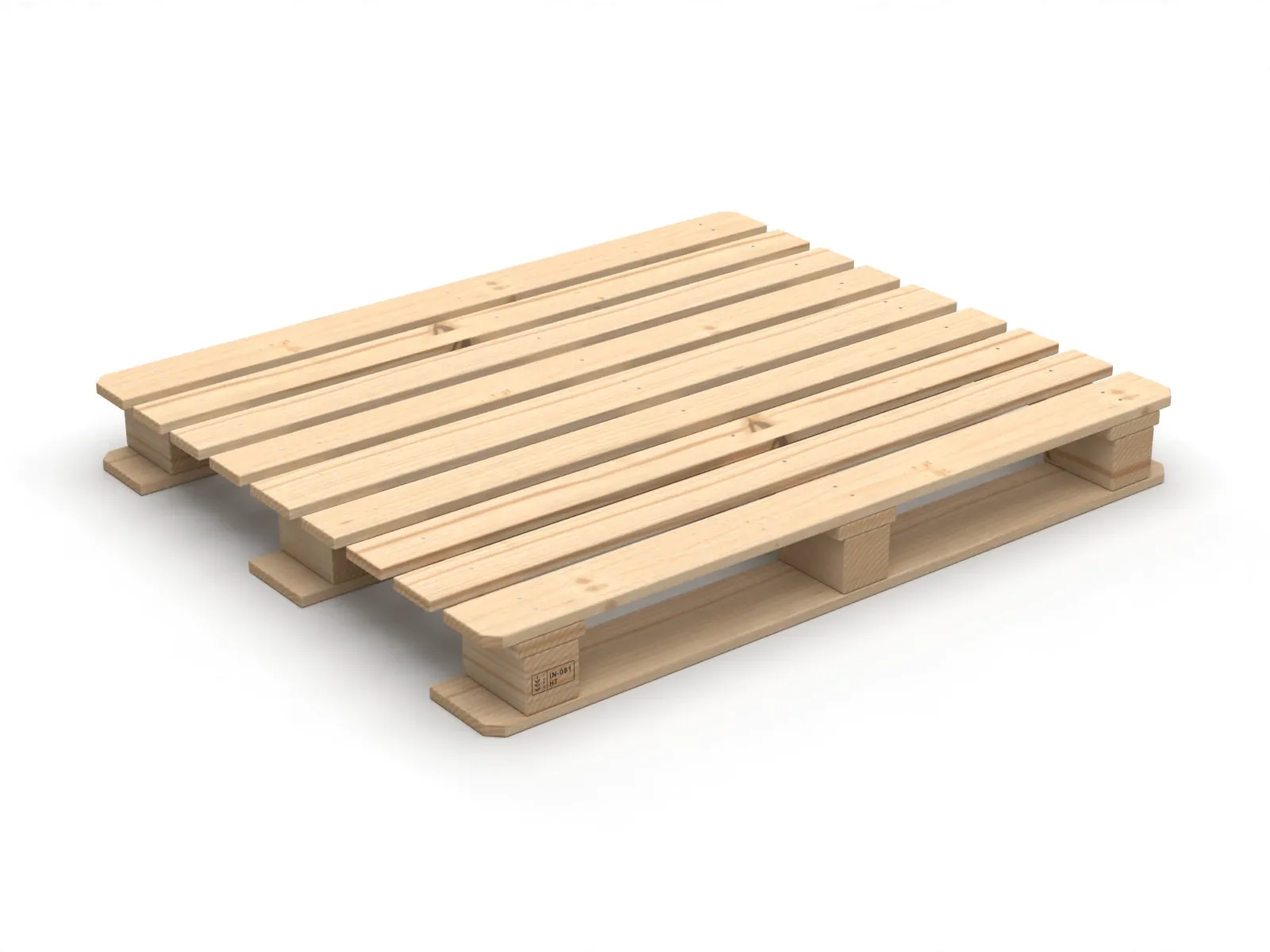
We run a registered ISPM-15 heat-treatment facility, registration IN-081, at our plant in Chikkabanavara, Bengaluru. Export pallets are debarked, heat treated with probes in the core of the thickest pieces, and stamped “IN-081 HT” next to the IPPC symbol on two opposite sides before dispatch. Because treatment happens on site, there is no waiting for a third-party chamber and no gap in the paperwork.
Have a shipment coming up? Ask us for heat-treated pallets or see our Euro-size pallets, CP-type pallets and GMA pallets.